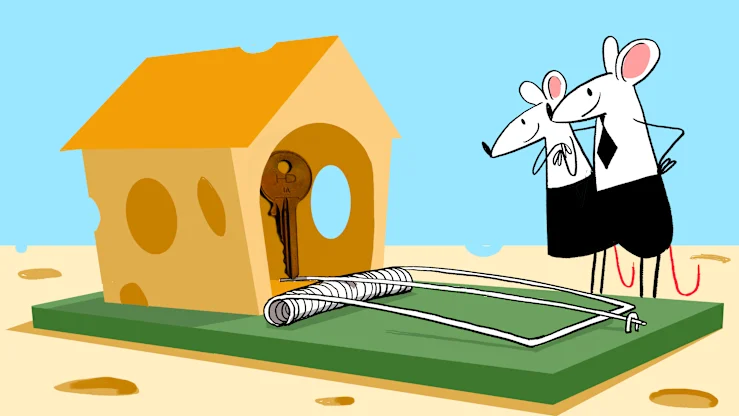
Acquiring a property priced over a million dollars, or a “seven-figure” purchase, is often seen as the pinnacle of financial success. It grants access to a prestigious real estate market, synonymous with quality, prime location, and legacy.
However, the luxury market is not without its risks. The sheer scale of the sums involved makes mistakes not only costly but potentially devastating. Here are the three most common and insidious pitfalls that can turn your real estate dream into a financial nightmare.
Pitfall #1: Ignoring the True Cost of Maintenance (The Weight of Prestige)
When you buy a seven-figure home, you’re not just buying square footage; you’re buying a lifestyle and high-end amenities. This is where the trap snaps shut.
A large house, a swimming pool, a sophisticated landscaped garden, a complex home automation system, or rare finishing materials (marble, exotic woods) require exponentially higher annual maintenance compared to an average property.
⚠️ The Risk: The “House That Costs Too Much to Maintain” Effect
Specialized Maintenance: Indoor pools, complex heating/cooling systems, or slate roofs require rare and expensive professionals.
High Insurance: The replacement value of the structure and contents significantly increases insurance premiums.
Property Taxes: Property assessments are often aggressive, leading to property taxes that can represent a major monthly expense.
💡 The Tip: Request a detailed history of maintenance expenses for the past three years. Include at least 1% of the total property value in your annual contingency budget for unexpected expenses and repairs.
Trap #2: Neglecting Hidden Defects Specific to Luxury Properties
In the seven-figure range, buyers often focus on aesthetics and finishes (chef’s kitchen, designer bathroom) and assume the underlying engineering is flawless. This is a mistake.
Luxury properties, especially those that have been extensively renovated or are older, present unique structural or technical risks that can be masked by expensive finishes.
⚠️ The Risk: “Systems” Issues and Compliance
Poorly Executed Renovations: A spectacular, but quick, renovation can conceal non-compliant electrical, plumbing, or insulation problems, or worse, structural defects.
Undercover Systems: Advanced security systems, backup generators, or ventilation systems may be outdated, requiring costly replacement rather than simple repair.
Easements and Risk Zones: Some luxury properties are located by the sea, in the mountains, or near bodies of water, which involve risks (erosion, flooding, landslides) that are often not immediately apparent.
💡 Tip: Don’t settle for a standard inspection. Hire a luxury building inspector and, ideally, a civil engineer to assess the foundations, roof, and mechanical systems. Check with the municipality for zoning restrictions or environmental risks.
Trap #3: Overestimating Market Liquidity (The Price Illusion)
In the seven-figure property market, buyers may be seduced by prestige and pay top dollar, believing that the value will only increase. However, this market segment is much less liquid than the standard property market.
If resale becomes necessary within a short timeframe (less than five years), it can be extremely difficult to find a buyer willing to pay the price you paid, especially if your property is very unique or eccentric.
⚠️ The Risk: Time and Uniqueness
Long Selling Time: Qualified buyers in this category are few and far between. A luxury property can remain on the market for months, even years, requiring a significant price reduction.
Overly Specific Tastes: Overly personalized decor or amenities (a dedicated home theater, a massive game room, unique architecture) can deter 90% of potential buyers. What appealed to you might be a turn-off for others.
💡 Tip: Consult your agent for accurate data on average selling times for properties of similar value in your area. If the house is very unique, request an analysis of its potential resale value. The money is invested in location and fundamentals, not just gilded features.
Conclusion: Buying a seven-figure property should be treated not just as a purchase, but as an investment.