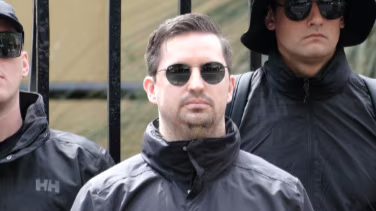
The Australian commitment to multiculturalism and democratic order was recently underscored by a swift and decisive action from immigration authorities: the revocation of a visa belonging to a foreign national who participated in a neo-Nazi rally outside the New South Wales (NSW) Parliament House. This incident, while isolated, sends a powerful and unmistakable message about the country’s zero-tolerance stance on extremism and hate speech.
The Incident: A Public Display of Hate
The rally, which took place in the heart of Sydney, involved a small but highly visible group displaying symbols and messages of hate. For the Australian government, the presence of a non-citizen participating in such an event was deemed a severe breach of the nation’s values and security expectations.
The individual, identified as a South African national, was determined to have violated conditions of his visa that pertain to character and security.
The Legal Grounds: Character Test and Community Safety
In Australia, the power to cancel a visa is extensive and often invoked under the “character test” provisions of the Migration Act 1958. These laws allow the Minister for Immigration to cancel a visa if a non-citizen is deemed not to be of “good character.”
Participating in an extremist rally falls squarely under this test, as such actions demonstrate:
-
A lack of respect for the Australian community’s values: Australia is legally committed to diversity, tolerance, and respect. Publicly supporting an ideology rooted in racial hatred and violence is fundamentally incompatible with these values.
-
A potential risk to community safety and cohesion: The presence of organised hate groups poses a threat to social harmony and the safety of targeted communities.
The decision to cancel a visa on these grounds is one of the most serious actions the government can take, effectively labelling the individual as undesirable and leading directly to detention and deportation.
🇦🇺 The Message: Australia is Not a Haven for Hate
The swift revocation of the visa serves several crucial purposes:
-
Deterrence: It sends a strong warning to other non-citizens that participating in, or supporting, extremist activities will result in immediate consequences for their residency status.
-
Security: It acts as a measure to prevent the radicalisation or organisation of extremist groups within Australia by removing those who seek to import or propagate hateful ideologies.
-
Reassurance to Communities: It offers reassurance to targeted communities (including Jewish, Indigenous, and diverse ethnic groups) that the government will use all tools at its disposal to protect them from public displays of racial vilification and threats.
Global Context: A Trend of Firm Action
This Australian action is part of a broader international trend where countries are tightening immigration controls in response to global extremism. Governments worldwide are recognising that while freedom of speech is protected, the propagation of hate and incitement to violence by non-citizens can be treated as a security risk, overriding temporary residency rights.
In conclusion, the decision to revoke the South African man’s visa is more than just an administrative procedure; it is a policy statement. It underscores that while Australia welcomes people from all backgrounds, there is absolutely no tolerance for those who seek to undermine its core principles of safety, equality, and respect through the promotion of neo-Nazi or other extremist ideologies. The message from the NSW Parliament incident is clear: Australia is not a safe haven for hate.