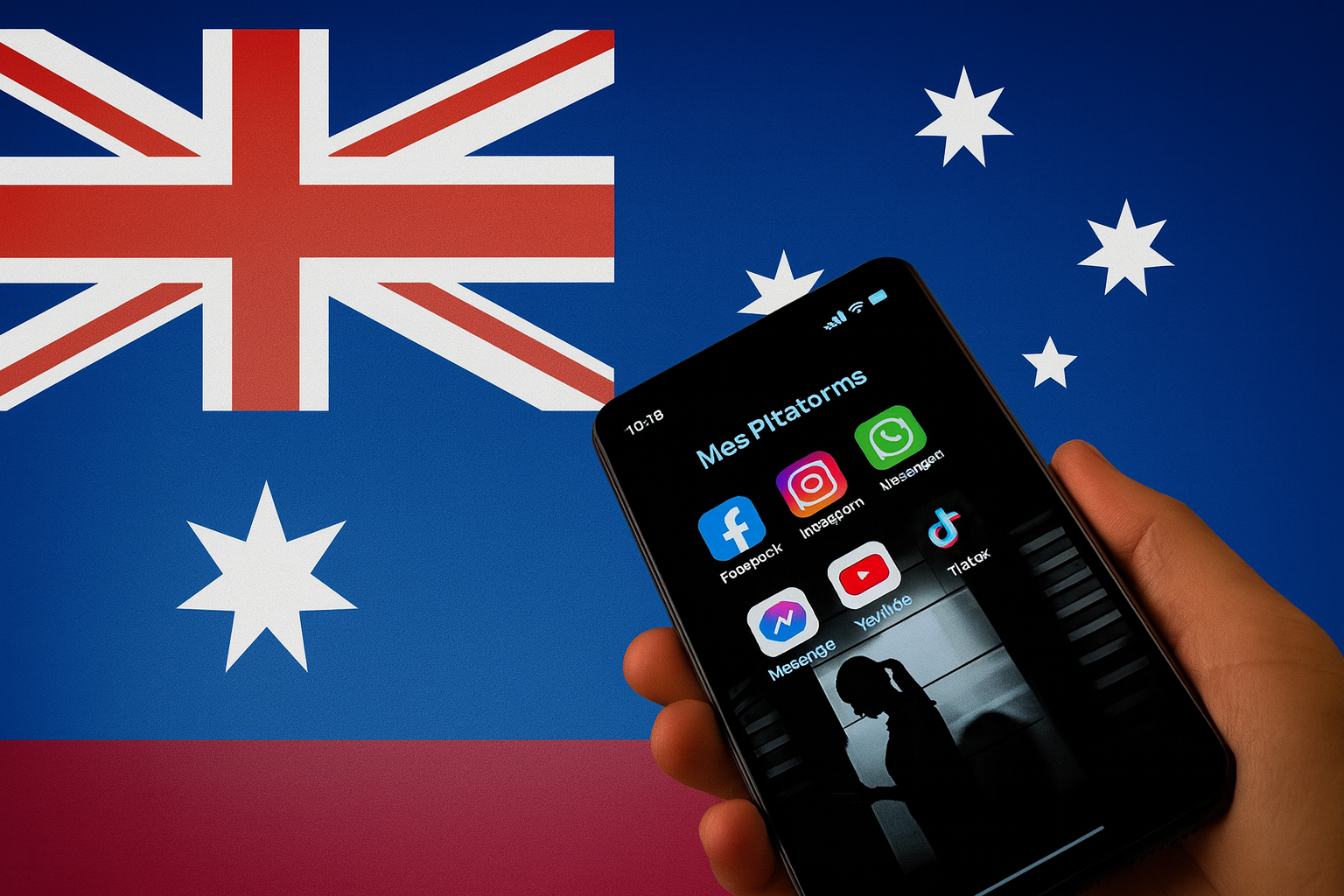
The oceanic nation of Australia, crossing a new threshold in digital regulation, is set to become the first country in the world to ban social media access for those under 16 from 10 December, thereby regulating access to TikTok, Instagram, Facebook, X, or YouTube. A radical measure aimed at protecting young people’s mental health and limiting their exposure to content deemed harmful, it is supported by nearly 70% of the Australian population, but raises several technical, ethical, and legal questions, both regarding the verification of users’ ages and the platforms actually affected by this new regulation, and especially whether this foreshadows the model of anticipated global democratic control over social media.
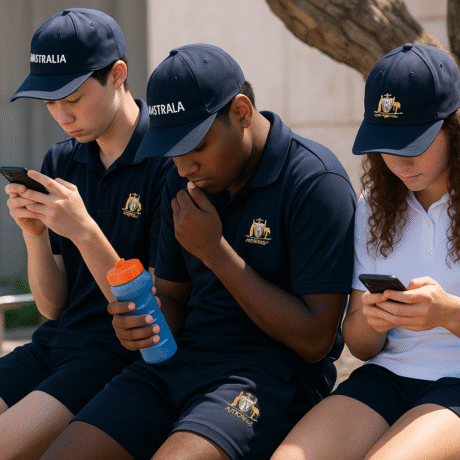
Australia, the first country to ban social media for under-16s
On 10 December 2023, Australia will become the first country to ban social media use for young people under 16. This is a response to strong concerns for adolescents’ mental health due to digital content and exposure to risky material. The measure targets the platforms most used by 14-17-year-olds: TikTok, Instagram, Facebook, X, Snapchat, and YouTube. Minors will not be able to create or hold an account (even with parental consent), and companies face fines of up to 50 million Australian dollars—a first signal to GAFAM and other tech giants. Supported by 77% of Australians, the measure represents a breakthrough in digital regulation. However, many questions are already arising: how will age be verified, which platforms are officially subject to the ban, will it be effective at scale, etc. Australia is taking a first step into a global debate on platform accountability and the protection of minors in a rapidly evolving digital environment, while legislation struggles to keep pace.
An unprecedented ban: how Australia plans to regulate social media access
As soon as a strict framework is implemented to protect minors, Australia indeed becomes the first country on Earth where the ban on using highly popular social platforms is now in place. From the law coming into effect on 10 December, all under-16s will no longer be able to create or maintain an account on social networks such as TikTok, Instagram, Facebook, X, Snapchat, and YouTube. Among other consequences, the measure aims to reduce mental health risks, decrease exposure to violent or inappropriate content, and limit potentially dangerous online interactions.
To enforce this ban, the Australian government requires platforms to take “reasonable steps” to prevent underage access. Simply put, the tech sector must prevent accounts being opened or maintained by users who are too young—the consent of a parent will not be an exemption. Fines for non-compliance reach 50 million Australian dollars, for example.
This exceptional approach makes Australia unique worldwide but raises questions. Google, which owns YouTube, told lawmakers that this would be difficult to implement on such a large scale. Verifying the age of millions of users, both existing and new, would be an unprecedented technological challenge. Nevertheless, the government remains determined: for 77% of the Australian population, according to recent polls, this ban is a necessary response to the growing dangers associated with social media.
The stakes and outlook of banning social media for under-16s in Australia
A challenge for tech companies
Social media platforms will need to implement reliable systems for verifying users’ ages while respecting their right to privacy. Solutions being considered, such as credit card verification for adults or facial recognition, are limited, but also pose risks of exclusion—especially for adolescents without financial means or those affected by technological bias. Implementing such controls, as seems imminent, clearly represents a major logistical headache for tech giants.
Digital education and parental responsibility
Within the broader framework of youth protection, safeguarding young people also involves digital education. Parents, teachers, and adolescents themselves need guidance for safe and responsible use of social media. For now, Australian law can limit young people’s access to platforms, but it does not replace teaching best practices online, particularly regarding vigilance toward harmful content.
Towards an international model?
If the effectiveness of this law is observed internationally, and if its successes and limitations influence future social media regulations, Australia could serve as a model for other countries wary of the risks posed by technology to children and adolescents.
At present, the Australian government plans to conduct an independent evaluation of the law’s effects only two years after its implementation, to possibly adjust the legal framework. This is a major advance, notably due to the unprecedented administrative sanctions applied to tech giants, and because it makes youth protection a key issue in social media regulation. In short, this is a decisive first step toward regulating social networks.