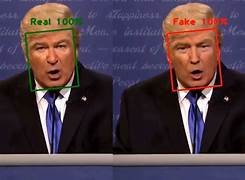
The era of misinformation has crossed another alarming threshold. The news sector, and particularly the BBC, is once again the target of a sophisticated attack. For the second time, a manipulated video—a deepfake—featuring Donald Trump has managed to infiltrate the media flow.
This new incident raises crucial questions about information security, media credibility, and the destabilizing impact these technologies can have on public discourse.
The Recurrence: Analyzing the Manipulation
The term deepfake refers to a technique that uses artificial intelligence (AI) and deep learning to superimpose a person’s face and/or voice onto existing content, thereby creating a video with unsettling realism.
- The Attack Scenario: While the precise details of the second video are often not made public to avoid amplifying its spread, the pattern remains the same as the first attack: a sequence that appears authentic, often circulated outside the BBC’s official channels, featuring Mr. Trump in a potentially compromising context or delivering inflammatory statements.
- The Target: The choice of the BBC, a globally respected institution known for its impartiality and rigor, is no accident. Discrediting such a respected media outlet allows the perpetrators of the attack to undermine public trust in “traditional” news altogether.
- The Main Subject: Donald Trump, a highly polarizing political figure and omnipresent in the news cycle, is the ideal subject. His image and expressions are widely available to train deepfake algorithms, making the fakes even more convincing.
The Impact: Why This Recurrence is Dangerous
The first attack could have been considered a test or an isolated incident. The second confirms a deliberate strategy aimed at disrupting the media ecosystem.
- Erosion of Trust: Each incident forces the public to ask, “Is this real?” This constant hesitation erodes confidence in images and videos, making the distinction between truth and falsehood increasingly blurry.
- Strain on Newsrooms: Teams at the BBC and other media outlets are forced to dedicate significant resources to verifying suspicious video sources, slowing down the dissemination of legitimate news.
- The “Fake” Pretext: These deepfakes provide political actors, including those who are victims of them, with the easy excuse to dismiss future embarrassing images or videos as being unauthenticated “deepfakes,” even if they are genuine.
🛡️ Information Countermeasures
Faced with this growing threat, media organizations must equip themselves technologically and methodologically:
- Authentication Software: The use of AI tools to detect subtle anomalies (eye blink rate, lip synchronization, inconsistencies in lighting or shadows) has become essential.
- Blockchain and Metadata: Some media outlets are exploring blockchain solutions to watermark content at the source. A video “certified” by the BBC could thus prove its integrity from the moment of its creation.
- Public Education: The role of journalists is no longer limited to reporting information but extends to educating the public on the telltale signs of video manipulation and the importance of verifying content origins (checking the official Twitter feed or website rather than an anonymous sharing channel).
A Call for Vigilance
The BBC, as a victim, is on the front line of this information war. This second deepfake attack involving Donald Trump is not an isolated accident but a wake-up call: manipulation technology is now mature enough to be used as a political and social weapon.


